Do you get SAD this time of year?
If so, you are not alone!
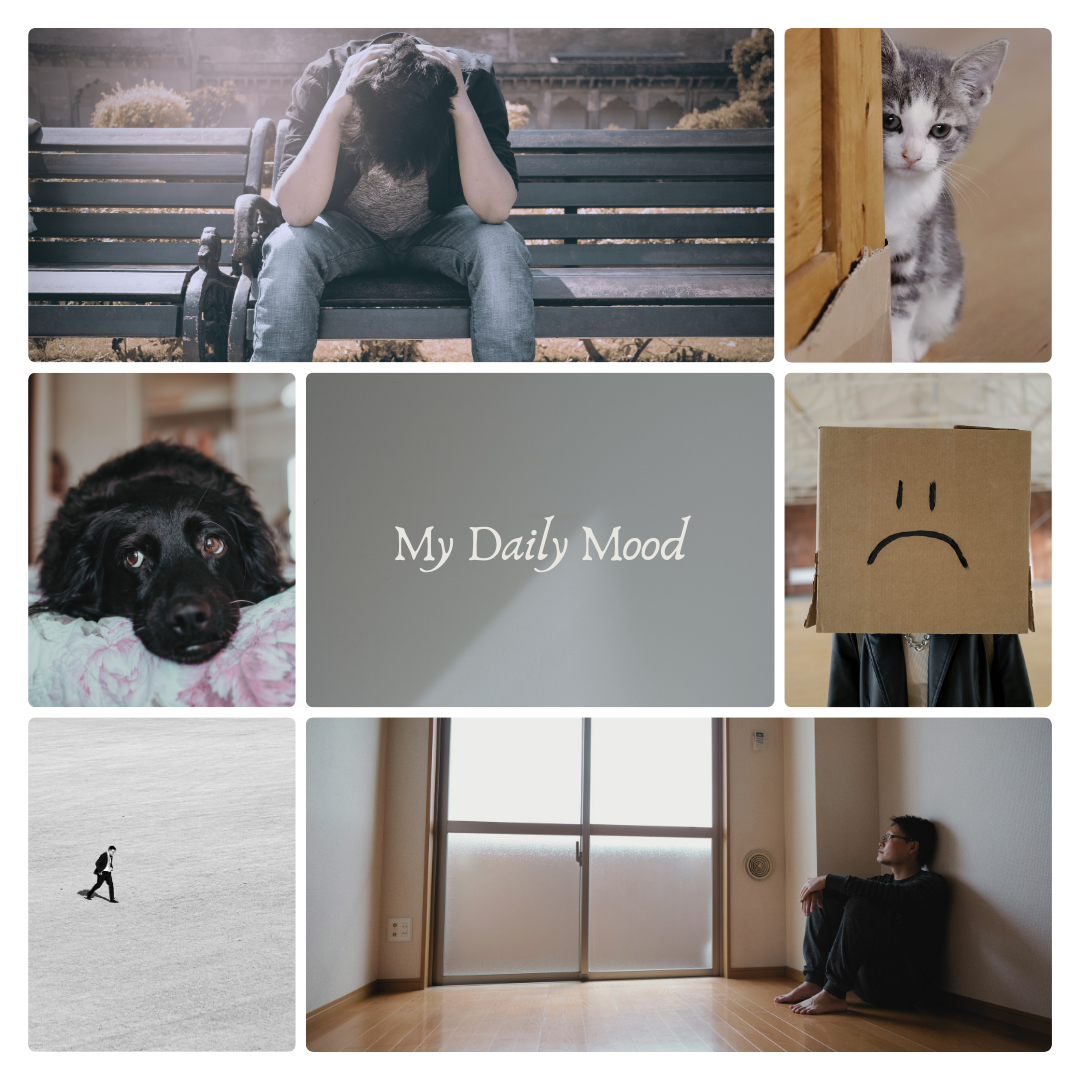
There is a mood disorder - a subset of major depressive disorder - called Seasonal Affective Disorder, or SAD, that occurs when someone has typical mental health for most of the year, but becomes depressed around the same time every year. For most people this happens in the fall, as the days get shorter and colder and the sun gets harder to find, but there are some people that struggle with SAD in the summer months, instead.
You’re at a higher risk if…
— You have ADHD
— You are a woman
— You have bipolar disorder
— You are young
— You have depression
— You have a family history of depression
— You live far away from the equator
Symptoms Include:
— Sleeping too much/Insomnia
— Having little to no energy
— Overeating
— Feeling hopeless or worthless
— Thoughts of suicide
— Loss of interest in activities or socializing
— Agitation or anxiety
If you think you fit the criteria and want to be diagnosed officially, please go talk to your doctor, a psychiatrist, or a psychologist.
If this sounds familiar, you have many of the symptoms without fulfilling enough for a diagnosis, or you could probably be diagnosed but you don’t want to bother, congratulations on understanding yourself a little better! Some people may not qualify for a SAD diagnosis, possibly due to having chronic depression, but understanding the concept of SAD can still be helpful. If SAD can make a mentally well person depressed, then surely chronic depression could also become worse in the fall and winter. Without understanding SAD, you may think you are slowly turning into the Grinch, so knowledge and understanding yourself is a great thing!
Why does this exist?

No one really knows for sure the exact cause for SAD, but there are different ideas and theories.
Many species change their behaviours in the winter due to the lesser availability of food and sunlight, as well as the challenges of surviving in cold weather. We may not be able to hibernate, but our bodies and minds can want us to.
Theories connecting SAD to a lack of serotonin (sometimes called the body’s “feel good” chemical) or too much melatonin (the sleep hormone) have been proposed, but are not proven.
One widely accepted theory is that SAD is connected to the lack of light that people get in the winter, since the sun is out for much less time. In extremely Northern areas, where there is little to no sunlight in the winter months, SAD rates are almost 9x higher than in places closer to the equator.
This sounds familiar… now what?
If this sounds familiar, for yourself or someone you know, there are a few things you can do.
The first, but perhaps most time-consuming option is to pursue an official diagnosis. This is the only thing that will allow you to access certain common treatments for SAD, such as antidepressants, specifically timed doses of melatonin supplements, talk therapy, or Cognitive Behavioural Therapy (CBT).
If you would prefer to explore options at home, or help someone that you know without dragging them to a doctor, here are some ideas:
Bright light therapy, which involves using a special light that imitates sunlight for at least 30-60 minutes per day. One trick is to turn it on as you wake up in the morning, to simulate sunrise. This is intended to normalize your sleep/wake cycle and melatonin levels.
Physical activity, especially done outside in whatever little natural light there may be. Even a small amount of movement helps convince your body that you have some energy.
Add Vitamin D to your diet. This one is not as well researched, but northern populations that eat significant amounts of fish have far lower rates of SAD than those that do not. Scientists believe it may have to do with fish being high in vitamin D and DHA, so those may be helpful to supplement, especially as the lack of sun decreases natural Vitamin D intake.
Relationships When You are the SAD One
If you think you may have SAD, or at least some of the symptoms, what can you do about it in terms of your relationships with other people? To an extent, your mental health is not their problem, for better or worse. This means that your mental illness is your own responsibility, and you can’t expect them to change their whole lives because of it, but they also can’t ask you to stop feeling a certain way or showing symptoms. However, supportive partners, friends, and family will WANT to help you feel better, and you will hopefully want to mitigate how much your symptoms affect them.
The most important tool to live together smoothly is communication! Your partner cannot read your mind, and so you should tell the people around you how you are feeling. One easy way to do so could be to have them read this blog post and then just point out which symptoms you experience. This will help you get support, and also prevent them from feeling like your lack of interest, energy, or happiness are their fault. Feeling depressed often leads to speaking in tones that do not match the way that you feel, which can cause confusion and frustration in your relationships. When you use a tone that expresses an emotion you are not feeling, you usually won’t notice, but it communicates inaccurate information to the person listening to you, and they will react according to what they hear.

If you can, think about ways that you could feel helped and supported. That is often challenging, especially if you are feeling especially low-energy and low-interest, so it can be helpful to think about it in advance of a bad day. It can also be useful to have a shorthand way of saying “I feel depressed/anxious/hopeless right now,” so that your loved ones can have context for how you are feeling. Something as simple as “it’s a blue day” or “low today” can convey your message without needing a drawn-out conversation in that moment. However, that does require a conversation ahead of time to agree on the meaning of these phrases, so that you are all on the same page.
Similarly, one essential tool in understanding your loved ones is the question “do you want a solution or are you just venting?” Ask the people in your life, and tell them to ask you! It is WAY too easy to hear someone complain about something and immediately start offering solutions – we are all guilty of doing this. However, many times people just want to vent, and often people get very annoyed with their loved ones if they want to complain about a symptom that has a straightforward “solution,” and they offer obvious suggestions. Knowing the solution is not the problem, following through is! The longer-term result of this is often keeping frustrations all bottled up, which doesn’t help anyone.
“There was never a night or problem that could defeat sunrise or hope.”
Relationships When Your Loved One is SAD
No matter what the relationship is, be it friend, family, or romantic partner, anyone who is suffering from depression at any time of year will need love and support from those around them. It is not your responsibility to manage their emotions or be their therapist. However, if they tell you that they are struggling or you have read the symptoms and find that they fit someone you love, hopefully you want to help how you can.

When someone is feeling despondent and disengaged, like with SAD, they can often come across as uncaring, uninterested, or uninvolved. If you do not know that they are experiencing depression, this will logically lead you to believe that something else is the reason – possibly that you are at fault! If you directly question them and they deny it, you may begin to feel like they are dismissing your concerns, and it can very quickly spiral into resentment and distrust on your end. This is why open communication is so important, because it gives context for everyone’s actions. Their behaviour might be understandable in context, or it may still be unacceptable if they are crossing your boundaries, but this way you are both on the same page regarding motivations.
If you are honest with them, hopefully they will also be honest with you. If you have read until now and think “I wish my spouse/brother/friend would find this, I think this describes them,” it may be possible to use this blog as a method to begin the discussion. If they are already aware, then hopefully it has clarified some of their symptoms and experiences for you. The more information you have about SAD, the better equipped you will feel to handle the situation. You can also encourage them to learn more, because they will feel more empowered and less alone the more that they learn.
The biggest thing to keep in mind is that you love them, no matter how they are feeling. While it is wonderful that you are trying to support them, remember that you also need to keep supporting yourself. Just like with airplane oxygen, you must put it on yourself first, or you may pass out before you can secure it on the person that needs help, and then no one is breathing. The key is using tools like the question “do you want a solution or are you just venting?” to keep life running a little more smoothly, as well as trying to come up with plans before the worst days.
If you are absolutely stuck with no ideas, tell them that! They would rather hear “hey I see that you’re having a hard time, and I suggested these things you usually like, but now I’m out of ideas” than have a loved one just ignore them until they come up with a brilliant idea on their own. Similarly, sometimes they may have no answers about what will make them feel better, and you would probably prefer hearing “I can’t think of anything that would make me happier right now, let’s just go to bed” so that you can stop trying desperately without making progress. Good support is much less about surprise miracles and more about connection, intention, and love.
Interracial, Intercultural, and Interfaith Challenges
The challenges in communication, needs, and balance when a loved one is having a difficult time will be different for every couple, with varying levels of complexity. However, being raised differently, with diverse beliefs, customs, and expectations can make these challenges more pronounced.

Some cultures embrace the idea of mental health and wellbeing less than others, so there is significant stigma attached to a diagnosis or symptoms. This can lead to anger, embarrassment, and shame if one partner suggests that the other may want to investigate SAD or get help for another issue. Alternatively, they may feel ashamed of their partner, either consciously or subconsciously. If this is something that is occurring in your relationship, communication is essential.
Listen to each other with an open mind, and if they say something like, “I’m embarrassed that you went to the doctor for bad thoughts instead of dealing with it yourself,” you can do your best to not get angry, understand that this clearly comes from a place of ignorance, and ask why they feel that way. Most often the answer will be along the lines of “because that’s how I was raised and I never thought to question it.” This is something that happens for everyone frequently, and it takes a lot of self-awareness to notice and start asking yourself if this is what you believe, or if this is you reverting to the dialogue that you remember hearing.
Having these discussions is very difficult, and it can be tempting to play it off as a joke, just go along with what your partner wants, or agree to disagree without actually understanding each other. Any of these options are unsustainable for long, however, because either the mental health issues will not be addressed and will get worse, or the refusal to understand each other will create a rift in your relationship. Having a couple’s therapist is a wonderful tool when having difficult discussions like this, because they are there to guide conversations and mediate between you. Going to couple’s therapy is not only for when a relationship is in crisis, but also for general upkeep and when dealing with situations that might destabilize the relationship. If you do not think that your partner would agree to go to couple’s therapy, you can go to individual therapy to discuss these issues as well!

To Conclude:
If you feel bad this time of year, you are not alone, it’s probably the sun’s fault, and you’re not the Grinch. There are several methods you can try to feel a little better. There are also ways that you can ask for help from your loved ones, and help those you know who suffer from SAD.
Talking to your therapist will also be helpful in navigating seasonal changes, SAD symptoms, and relationship concerns that may arise from these issues.